Descriere & specificații
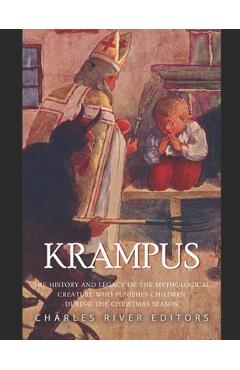
n*Includes pictures n*Includes contemporary accounts n*Includes online resources and a bibliography for further reading n'Tis late night in Bavaria, and all through the villageThe grownups are drunk, full of beer and such swillage;While children a-tremble, hide deep in their beds, Fearful the Krampus will rip off their heads. - Ann Hart, Krampusnacht (2016) nChristmas is the most important holiday of the year. After the corresponding days that exalt the national pride of each country, such as Independence Day in the United States, Victory Day in Russia, or Bastille Day in France, it's December 25 that articulates the life, the work and the economy in much of the world, including many non-Christian countries. Since ancient times, the beginning of winter has been the occasion for most people to eat, drink, dance, and get together to beat the drum and take a break. nOne of the aspects of Christmas that is most famous is Santa Claus, a mythological figure with many monikers, such as Kris Kringle, Father Christmas, and Papai Noel, among others. Pop culture enthusiasts know to trace Santa's roots to Saint Nicholas, and it's widely accepted that Coke manufactured the contemporary image of Santa embraced by the world today. On both counts, they are only partially correct, because in reality, Santa is a colorful amalgamation of different figures who appear in various countries' folk stories across a wide range of centuries. nThough Santa had many influences, his most famous is St. Nic